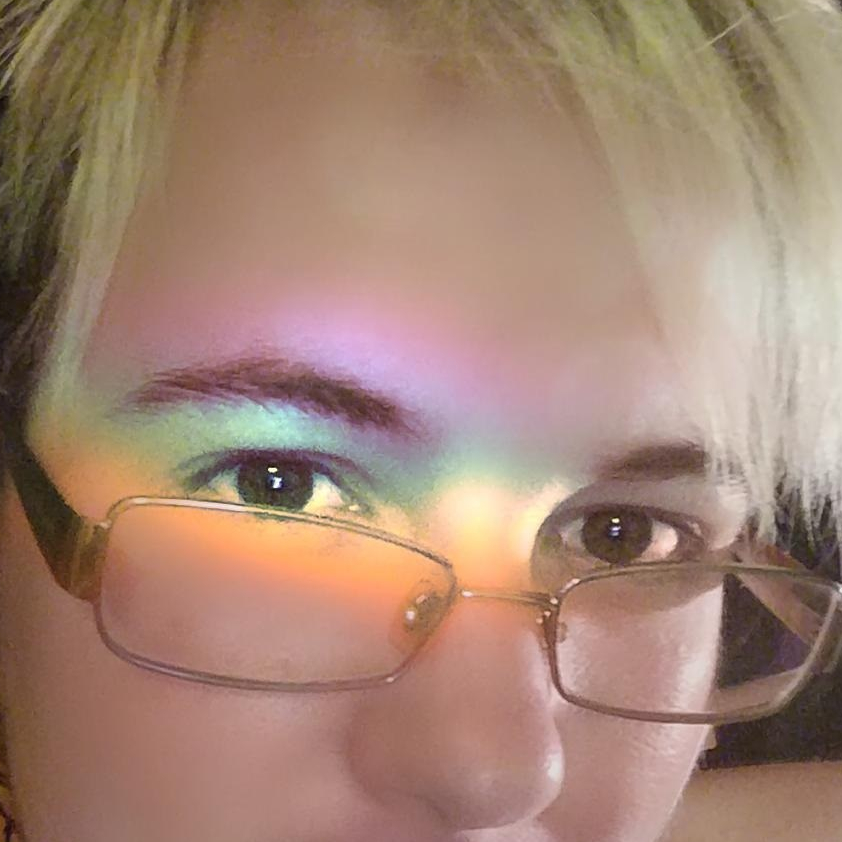
Refusing to be erased – on being seen as a trans man

“You can’t be a man, you didn’t play with trucks as a kid!”

“Are you sure you aren’t just a butch lesbian instead?”

“Thank you ma’am” “Uh, I’m not a ma’am” “Oh don’t worry, you don’t look manly” “No, I mean I am a man”  “Don’t say that honey, don’t worry, you’re pretty I’m sure.”

This is just a small cross section of reactions I got when coming out as a trans man.  It is not an easy thing to live your whole life feeling like there is something deeply wrong, or to know that the way everyone sees you is a lie.  It is not an easy thing to wake up one day and realize it after years of not acknowledging it, you have the agony of so many years gone by where your expression of self was mysteriously discomforting or feels false.  Once you finally feel that click, if you aren’t someone who was well aware that you were trans from a very young age, it is liberating for a moment.  The acknowledgement of yourself is sweet freedom on silver wings, it fills you up with golden bubbles of giddy hope.  That moment is often heartbreakingly short before the icy cold dread sets in. You start to wonder who you will lose, who will leave your life, who may hurt you, if you will become another murder statistic if you start trying to present yourself as you are in a cruel bigoted society.  I was extremely lucky, I’ve only been assaulted once (for being trans at least), I lost very few friends, and my family struggled but have managed to come to some degree of acceptance.  I had to fight for recognition for a few years before I developed the infamous “passing privilege” though.  Now when I go out, people see my face even with my new long hair, they hear my voice, and to them it all speaks of man.  The years before that were true, were a hell though.  Once you have felt incredibly whole and at home with yourself when you acknowledge your gender, you have something precious that society can tear pieces out of with every misuse of pronouns or deadnames, with every slur, with every unfeeling comment.

I did play with trucks as a kid.  My favorite toy for the first seven years of my life was a big yellow dumptruck and I played with it outside incessantly.  I hated dolls and teddy bears, though realistic plush animals were something I adored since I had always loved animals.  I loved my StreetShark action figures. I hated going to a school where skirts were mandatory, and insisted if I must wear them that they be patterned with lizards or frogs and have hefty pockets built in for collecting rocks.  These things mean nothing to determining my gender, gender isn’t built by your toys or your hobbies or your interests.  But when I came out, my father cited my lack of interest in trucks to explain his surprise.  The fact that he’d apparently blocked out such a large portion of my childhood to get that facts wrong was irrelevant.  The message was the same, he would rather forget the markers that could have clued him in if we’re buying into binary gender rolls, and he needed me to justify the core of myself with childhood toy preferences to be valid in his eyes.

My father was the same person who asked me why I couldn’t be a butch lesbian when I came out as a trans man.  As the man who reacted with homophobia when I first had a girlfriend, it was clear what this meant.  He had come to accept I was something he didn’t understand, something he had prejudices against, but good god at least that something wasn’t transgender, and now that it was, he wished for the good old days where I was just a “mild normal queer”.  I tried to explain to him that I could no more be a butch lesbian than he could, since neither of us was a woman.  In fact, I was farther from such then he was, because at least he was interested only in women, whereas I had realized by that time that I was mostly gay.  I spelled out how in being a man who likes men, I was pretty much the opposite of a lesbian by binary gender and sexuality standards.  His response was to protest, “but if you were a lesbian you could still wear flannel”.  Yes father, because I would like to undergo societal prejudice, risk my life by being myself, inject my muscle with a big ass needle every two weeks, subject myself to extensive surgeries, and have to fight to even be seen by the people closest to me….because I want to wear flannel.  If this was about flannel I would have just bought out a fucking L.L.Bean.

A nice woman at school was selling cookies.  She “ma’amed” me, and I was tired of not standing up for myself, so I tried to correct her.  Instead of hearing me when I said I was a man, she tried to reassure me, thinking I was talking down about myself.  It didn’t occur to her that I might actually just speaking my truth, that my words might mean exactly what I had said.  It was easier for her to interpret some imagined hidden message and apply it to me than it was for her to just see me as I said I was.  I spent a week replaying the moment in my mind, formulating the perfect responses for next time to be more clear.  The only thing that usually works is outing myself.  If someone doesn’t want to see you as a man because they don’t fit their notion of it, no matter of insisting on it seems to help.  You have to explain you are a trans man, another breed of human in their eyes so they can justify why you don’t fit inside the boxes they can’t look beyond. So for the few years it took for me to develop a deeper voice and some facial scruff I was faced with a series of choices.  Either I could try and insist I was a man and not be believed, I could crumple inside with every “ma’am” or “miss” and have the words repeat at night until I wanted to disappear or die; or I could out myself, usually in public in the hearing of multiple strangers.  I didn’t know which of those were accepting, supportive, indifferent, or deeply prejudiced.  I saw trans friends dying every year of violence, killed by partners, acquaintances, family, and strangers.  I couldn’t know which passerby might hear me and be so offended by my very existence that I would be the next funeral in an endless procession of trans deaths.

These days my existence is happier, I am safer existing as I am.  I don’t have to make choices between my mental health or physical safety multiple times a day, I don’t have to justify my childhood toys or clothing choices to prove myself.  That spark of joy that shone so bright when I finally acknowledged this aspect of me has been fanned into a bright flame.  There are still shadows though.  My safety is contingent still on not being seen.  I am acknowledged now as a man, that is far more affirming then before.  My identity is respected and seen.  But my experience is not, because I am not just a man, I am a trans man.  I have a lived experience in fighting for manhood that a cis man will never have.  And my safety and comfort on a daily basis is contingent on my lived experience being a carefully guarded secret.  None of this can change until society does, and I fear for my new baby trans friends who are just beginning to come out.  My heart aches for what they might face, especially knowing the road I barely survived was one of the easiest paths to this end.  All I can hope for is those moments of joy and acknowledgment, that exhilarating feeling of freedom and truth on it’s vast silver wings, will be enough to carry them through.  Or society can change, one leap at a time we can stop with the assumptions and the stereotypes and the enforced gender rolls and the bigotry, until this life path is just as much a challenging but engaging climb as any other, and not a harrowing trip through the valley of death.  I still out myself when it might help, when it might change someones thoughts, when there is a chance it might pave the way for the trans folk of the future.  That choice is worthwhile for me, there is still something worth risking my life for, and it is a better world.

Five things to know before dating a trans man

So you want to date a trans guy

So you want to date a trans guy, who could blame you, most of us are really hecking awesome!  When you get involved with someone in a dynamic that in some way doesn’t fit societal scripts though, you may feel somewhat at a loss.  That is why there is so much communication before folks enter polyamorous dynamics, society doesn’t tell you what the rules are, so you make up your own.  When dating trans folk it might feel equally daunting, you don’t want to make any assumptions and bungle this up, but you don’t know if the usual societal script in a relationship will fit.  So here are a few things to remember if you are looking to start a relationship with a trans man.

Examine your motives

Why do you want to date a trans guy?  If you are interested in a trans man because you are sure your sexuality is one way, but want to experiment with a person who you see as kind of the other binary gender but not quite, you should fuck off with that noise.  People don’t like being used as an experiment.  If you fetishize trans folk in particular, you should also probably fuck off with that.  There are a few rare trans folk who really like chasers, but for the most part, that is a hard nope.  Most people want to get into a relationship with someone who likes them for who they are as an individual person, not because they are an interchangeable fetish object with any other of the million plus trans men in the world. If you met someone that gives you warm chest fuzzies or makes you feel tingles in your pants and it just so happens that they’re also trans, you’ve got the green light to move on to the next step.

Don’t be afraid to discuss how sex will work…but only if you’ve gotten to that point

So when I start talking to someone and one of the first things they ask me is what I like in bed, I’m probably going to tell them to fuck off, or eat their soul and leave their corpse for the ravens, who knows.  Most people don’t like that. If you haven’t both specified that you’re just in it for a hookup, this conversation comes later in the game. But when you do get to the point where sex is on the table, and you both have said you want to do the funky tango under the sheets, you need to discuss what you want out of that.  Now this is good in any dynamic, never assume what your sexual partners are and aren’t okay with, consent is key.  When dating a trans guy though, some important things to cover.  Firstly, what parts are they willing or not willing to use for sex?  Some trans guys have vaginas, some have had bottom surgery, which can mean that they have a penis or in some cases have a penis and a vagina (yup, you can keep your vagina with some types of bottom surgery, that is a thing). Some trans guys don’t have bottom surgery, but get enough clitoral growth from testosterone that they can use their clit/dick for penetration. Some don’t like the touchies of their genitals at all and prefer to use a prosthetic.  Some just like to bottom, but only for anal sex.  There is no assumption you could make about what kind of sex a trans guy wants that is going to be correct with all of us, so ask!  Also, ask what to call various parts.  Some words can be triggering, and you don’t want to be all revved up for sexy time and then refer to his vagina as a pussy, when the only word he’s comfortable with is bonus hole, and suddenly instead of sex you’re dealing with helping him through intense dysphoria when you could have just asked first!

Do not ever out someone without their permission

This shouldn’t need explaining but it so often does.  Being trans can put someones life at risk.  Being trans is for some, a huge part of their identity, but for others just a part of their medical history that they don’t discuss unless absolutely necessary.  Being trans often comes with dysphoria, a never ending feeling of discomfort day in and day out that makes you want to crawl out of your own skin, and sometimes a trans person may want to just exist in the world without constantly wondering who knows and what they think of them if they do.  It’s exhausting wondering who secretly hates you and wants you dead or judges you as a freak, every time you leave the house.  And when you decide that your amazing man is coming home with you for Christmas dinner and then he gets hit with a barrage of questions about his genitals and surgeries from Aunt Muriel when he just wants to be enjoying some fucking ham, that ranges from uncomfortable to excruciatingly painful and rage inducing.  Don’t put your guy through that.  If you are ever wondering if you should mention to your friends or family or coworkers that he’s trans without asking him, the answer is always NO.  If you have a reason to want to tell someone, you can ask him if it is okay, but honestly, if he wanted someone to know he could almost always tell them himself.

Consider gender in regards to your sexual orientation

As a trans guy who usually dates other guys, I’ve been with some gay guys that have questioned if they were actually gay because of being with me.  Yes you fucking are.  Trans men are men plain and simple. You can totally question if you’re gay because maybe you’re finding you aren’t just into men, but dating a man with the limited edition genital package at birth instead of the stock version, is still dating a dude.  I’ve also seen in the lesbian community that a lot of lesbians will date trans men but not trans women.  Not liking penis is okay, I encourage unpacking those kind of feels because often time there is a hidden societal influence to them, but if you find you just prefer a hole to a pole that is perfectly fine.  But if you are dating a man and you are a woman, that is not a lesbian relationship.  You can identify as a lesbian because that might be your overarching orientation and you just happened to find a rare exception, but make sure to also validate your partner’s gender and reassure them that you do in fact see them as a man and recognize that you are in a relationship with a guy. As a whole, sexuality can be a complex fluid thing.  Labels are very useful for explaining it in shorthand, but sexuality can be a lot more complex and is sometimes filled with “I’m only attracted to xyz, except when a…and maybe sometimes when b….and that one weird time with c but I’m not sure I’d do that again, who knows?” So definitely figure out what labels are comfortable for you, but do not invalidate your partner’s gender with that label by insisting they fit in that box if they don’t.  If there is a conflict there, make sure they understand that you see them for who they are and maybe your sexuality is just a little more variable then you expected.

Respect pronouns (duh) and respect triggers

I shouldn’t need to have respect pronouns on here, but just in case it somehow didn’t occur to you, use the pronouns a person is okay with.  If you don’t you’re a shitbird, and hopefully they aren’t going to actually date you anyway.  If you’re a trans person reading this and your partner is not willing to respect your pronouns, you can do better I promise you.  Less often thought of, respect triggers.  When I say triggers, I am not referring to things that get your jimmies in a bunch, a trigger is something that causes a significant effect on the mental state of a person and often inhibits their ability to function.  Think an army vet with ptsd who can’t leave the house for three days after the fourth of July because of fireworks, that is a trigger.  If you downplay the triggers that other marginalized folks face but can understand that one, you need to think about it for a bit, and learn to cultivate some compassion for anyone’s experience of trauma. When you get involved with a trans guy, you are most likely getting involved with someone who has experienced some amount of dysphoria and discrimination.  I’ve had one of the smoothest and easiest experiences of all the trans folk I’ve known, and I’ve gotten death threats, been shoved around in bathrooms, lost friends when I came out, and faced legal discrimination.  When death threats and physical assault are an easy time, you can imagine what some of us have been through.  Also dysphoria, the feeling that your own body is betraying you to the point that existing in your skin is excruciatingly painful and you just want to tear yourself apart and disappear, not a fun time.  Find out what triggers these things in your partner and don’t do them.  If you do them by accident, offer comfort in the way your partner prefers.  DO NOT self flagellate and make it all about how sorry you are.  If you fuck up and refer to them by the wrong pronoun and now they’re in tears, your response should be a quick “I’m sorry” and then focus on helping them. When you spend five minutes apologizing and center yourself after being the one who did the fucking up, that’s shitty. They’re now struggling to function and have to worry about assuaging your guilt on top of it.  So learn triggers, be respectful of them, and when they happen, react in a way that actually helps to comfort and heal the pain you caused and does not center yourself.

In conclusion

So those are my top five things to remember if you find yourself feeling those good old wibbly wobbly feels for a trans man.  Remember, every relationship is unique, and you should always communicate in depth before jumping in because different people need different things.  Hopefully this at least gives you some good ground to start on.  Let me know if y’all have any others you think are important to add to this list, and when you find a shiny wonderful trans guy has stumbled into your life, enjoy your luck and don’t be a shitbird!


The secret to coming out and not getting eaten alive

Almost everyone in the LGBT+ community has a coming out story. Many polya and relationship anarchist folx have coming out stories as well.  Hell, even furries have coming out stories. Whenever you discover something about your identity that just –clicks– and explains all these squiggly-wiggly little feels that were fluttering around deep inside, and your world just radically shifts because you’re no longer alone and there’s a word for that! then there is a potential coming out story waiting to happen.  I won’t go into why labels are important to identity, that is a rant for another time, but it’s safe to say that those of us in often marginalized communities really value these words for our identity.  They give us the acknowledgement that someone else has felt this before, enough to make a term for it.  And once we have that term, once we can use language to crystallize in our minds what was already there and view it through a clearer lens, we often want to express that. We have a part of ourselves that we likely ignored, repressed, erased, neglected, or shut down, because we didn’t know it was allowed to be a thing. Suddenly it is a thing, a real thing, there’s a word for it so it must be, and we can see ourselves in it.  We want those who love us to acknowledge the part of ourselves even we might have been afraid to before, to accept and provide support or reassurance. This is just fundamentally human, but it turns into “coming out” because we quickly realize that these things about us that we may have repressed are in fact –a big deal– to some people, and their whole concept of us may change radically, so telling them because this big moment.

I have a bunch of coming out stories, since I have had quite a few marginalized aspects to my identity over the years as I’ve discovered myself (bi, pan, gay, queer, genderqueer, trans man, polyamorous, relationship anarchist, etc), but I’ll pick one to go with.

The first time I came out to my mother about being polyamorous was on the ride home from college, on my first college break.  I had been in polya type dynamics before, but I didn’t have a term for it, and also did not share as much of myself with my mother as an early teen, so I don’t think she was aware.  When I told her about my new dude and that we were polya, she told me I didn’t know what love was and implied that it was an excuse to sleep around.  She accused me of being horribly unfair and unloving to my dude, as though he didn’t have the agency to consent to that kind of dynamic and was forced into it, because who would agree to that willingly. I remember passionately ranting the whole two hour ride home about what exactly I thought love was.  I could spend two hours describing all the things love meant to me, so clearly me being non-monogamous was not because I did not understand the many aspects of love. By the end of the conversation she had stopped telling me I didn’t know what love was, maybe because she actually listened to my passionate rant, maybe because she just wanted me to shut up, though I chose to believe it was the former.  My ways of relationshipping have continued to evolve over the years and I’ve been able to be very open with her about them, though I’m still not sure if I have complete understanding or acceptance from her or my father.  At the very least, I can have all my partner’s and parents together for thanksgiving every year without incident, so that is something. So compared to the reactions many folx get when coming out, I was pretty fortunate, I wasn’t disowned, just invalidated, and things have gotten better from there.

Parents, friends, and the workplace and three big arenas where folx feel they have to come out, that it may be essential that others see them as who they are.  When I had my first really career related job, I did not “come out” to my employers. I had been around groups where I was completely open about all of me that it has stopped being a thing I thought about. The first time I censored myself and then realized only after the words left my mouth, I referred to someone that I always called “my partner” as “my friend”.  I couldn’t stop thinking about it after.  As someone who is extremely honest at all times about everything, to the point of not just telling the technical truth, but trying to give the most absolute and clearly understood and elaborated on truth, it really ate at me.  I could have justified it as yes, this person is also my friend as well as my partner so technically not a lie. But to me that was a lie, that was an edit that I put in there out of unconscious fear of backlash in my workplace, where I couldn’t escape it because I needed my job.  For me, nothing is worth feeling deceitful, so I promised myself I would not do so again.  The next day, when talking about the same person, I referred to them as my partner.  It was clear in the context of the conversation that this long distance partner I was talking about was not the same live in partner I frequently rambled about.  I didn’t come out with a big announcement or parade, I just was honest, in the context of a normal conversation, in a way that made it seem commonplace.  I didn’t act like what I was saying was anything out of the ordinary, because for me, it wasn’t.  There was no shock, no deviation in the conversation, and from then on whenever it was relevant to talk about my partners, I did so just as openly as I do among any other group.  After a time, my office manager did ask me what being polya was like because she was curious, but even in a workplace of mostly conservative folks (they almost all voted Trump and I heard a whole lot about Jesus if that gives you an idea), I didn’t experience any real kind of backlash for being polya. It was the same way with being gay and a trans man just for the record. I just spoke of myself normally, and if something that highlighted those aspects of my identity was relevant to the conversation, I didn’t tailor or edit my words.  I just was myself and treated those marginalized aspects of my identity as completely normal, and therefor, so did everyone else.

I had learned that little secret before, but that experience really emphasized it for me, because it was the first time I was really around folks who had views that so heavily opposed my own, and some of which involved thinking of those aspects of my identity as wrong or sinful.  If you don’t come out with a fanfare, but just act like those parts of you that society may not always accept, are normal, –because they are– then most people will follow your lead. Doing it that way allows them less room to object.  You are the one talking about things in a completely commonplace way, you are not announcing it in a way that they might see as inviting opinion, and that aspect of you identity is likely just a side note and not a centerpiece in the discussion it comes up in.  That puts the onus on them to make a big deal of it if they are going to.  They suddenly have to be the one that stops the conversation, derails it, and initiates making a fuss.  I’m not saying there aren’t some people who won’t do so, but people are a lot less likely to feel comfortable doing that, then attacking you if you make a big announcement of it and give them a platform to give you an earful of exactly what they think.  This isn’t a full-proof method, especially with folks like parents who are close to you and may feel they have license to criticize and comment on anything you say, regardless of the context.  But the folks who are going to really flip their shit, are going to do so regardless of how they find out things about it.  Those kind of douchenozzles may be beyond saving, and that’s unfortunate, but they are just teaching you that you are better off without them at all.  Your run of the mill reasonable person (those do still exist don’t they?) is going to be averse to picking a fight where they are the instigator though, so approach these things with normalcy and sprinkle them in during casual conversation where they would come up anyway if you were being completely honest, and they likely won’t have time to mount an attack before the conversation has continued on. You also then have mentioned it, and they didn’t get a chance to express displeasure or tell you all about how you’re going to hell, so since they’ve already not objected once, it would be harder for them to do so when it next comes up.

Aside from the pustulent analspheres who would find any excuse possible to attack you anyway, most folks seem to react well to this approach.  There is one big downside, which is that for some, the aspect of coming out with a big flourish is a matter of pride.  It is a way to show that yeah I’m heckin’ proud about this cause I am a fabulous magical beast and nothing you can say will change that fuckers! And you know what, if that is what is best for you, do that thing! If you need another way that is more subtle and seems to met good results for those who are really concerned about reactions though, then here it is.  And there is big upside about just being so super casual and acting as yourself, not officially coming out but just letting the parts of your identity that people do feel they must come out about just come up as normally as your favorite sportsball team or what you’re doing that weekend.  When you act like it’s normal, because as I’ve said, –it is-, you help normalize it for others.  Thirty years ago if a masculine presenting person mentioned his male partner in the office, it would have been received very differently in most places then it is today.  Treat your -shiny and unique but still part of the normal variation of humanity identity pieces- as normal. Remind the world they are normal.  When we normalize all those things, we continue to make it easier for the next generation of lgbt+ and polya and other marginalized folx, and that is worth doing.